
When a Watch Becomes a Moment
Some watches carry a story beyond their design.
Not simply through the details they hold, but through the way they gather a place, a collaboration, and a particular moment in time into something complete. The Lincoln was one of those watches.
It came together in a way some creations do, when the ideas feel less invented than discovered. Our workshop sits in the shadow of Lincoln Cathedral, and for years the Cathedral had quietly shaped our imagination. Its stonework, its light, and in particular the tracery of the Bishop’s Eye rose window had long felt rich with possibility.
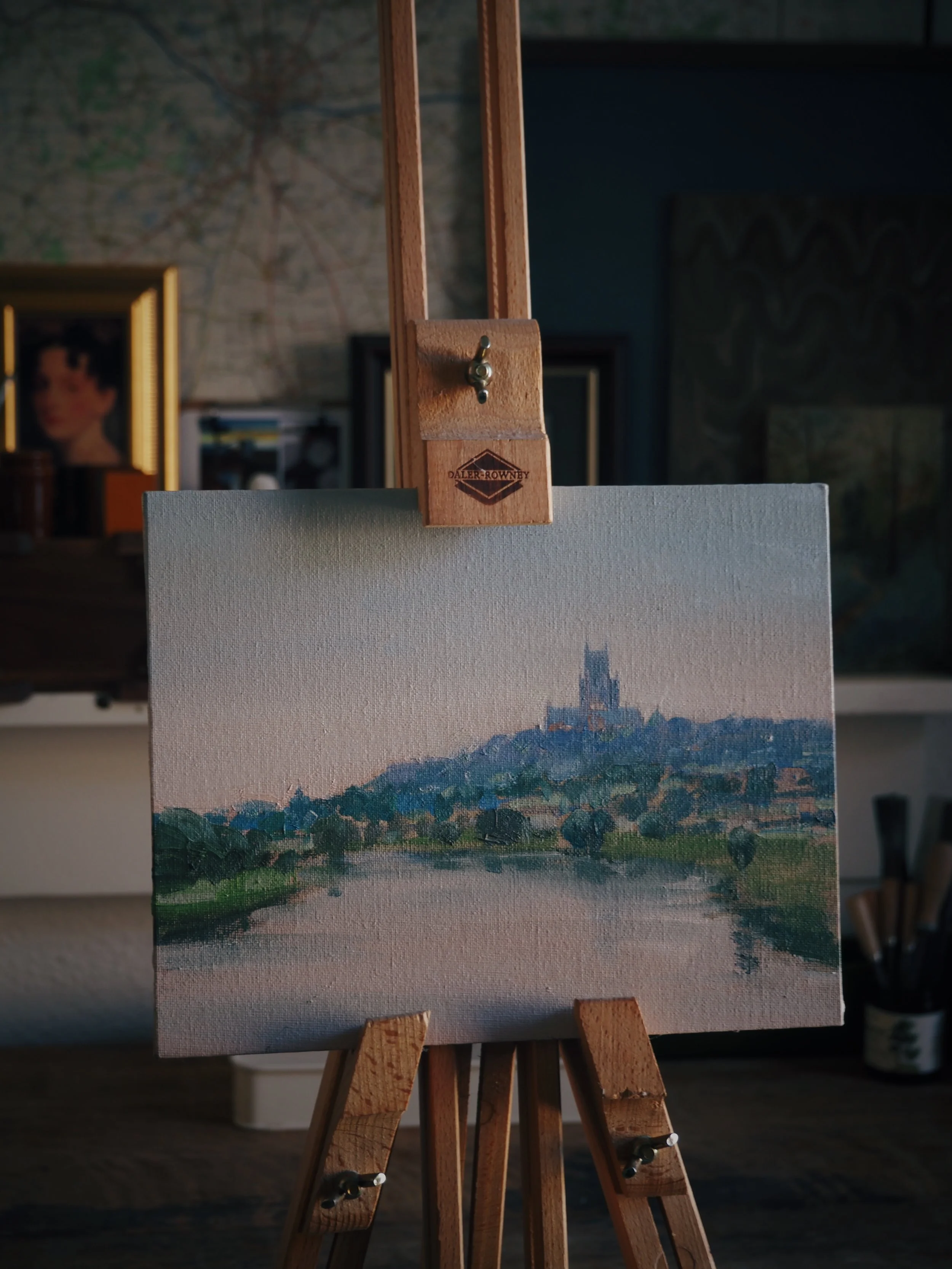
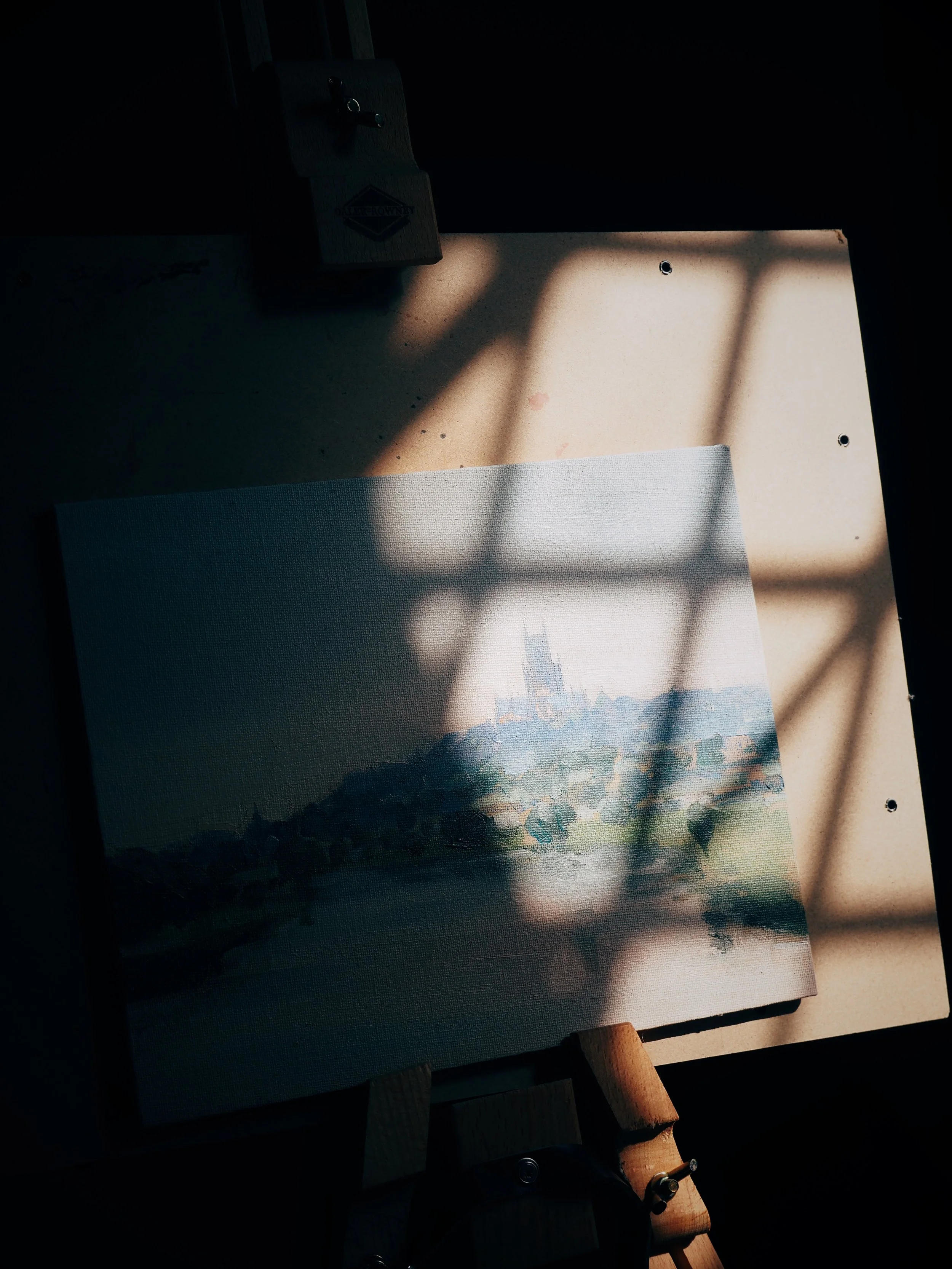
At the same time, we had recently met Lincolnshire artist Dominic Parczuk, whose paintings carried something of the same atmosphere we value in watchmaking; depth, stillness, and a sense of place revealed slowly. The idea was simple, but compelling. To create a watch shaped by Lincoln itself.
From that came a dial inspired by the Bishop’s Eye, translated by our in-house stylist at the time, into a pattern whose subtle shadows reveal themselves over time. The Fleur-de-Lys on the crown offered another quiet nod to the city. And alongside the watch, Dominic created an original oil painting of Lincoln, reproduced as an archive-quality signed print to accompany each piece. Every watch carried its own numbered print. Every print carried the number of its watch Fifty examples in total. No more.
Looking back, what feels most special is not simply that the Lincoln sold out, though all fifty did, but that it felt whole as an idea. Complete in its scale, complete in its story. There was something rather satisfying in that. A watch made in Lincoln, inspired by Lincoln, accompanied by an artwork born of Lincoln, all assembled a stone’s throw from the Cathedral that first sparked it.
It remains one of those projects we think of fondly.
Perhaps because it captured something central to what we believe watches can be. Not merely instruments or possessions, but companions shaped by meaning. And perhaps too because it quietly reminds us of the nature of limited things. Some watches remain in the collection for years, becoming familiar presences. Others arrive as singular moments. They are there, fully formed, for a time, and then they pass into the hands of those who recognised something in them.
We still hear from people who discovered the Lincoln after all fifty had gone. Often they say the same thing: I wish I hadn’t waited. We understand that feeling. There is a natural instinct to take time over something special. We would never discourage that. And yet part of what makes limited watches meaningful is precisely that they cannot be revisited indefinitely. They ask to be met while they are here.
The Lincoln taught us that. Not as a lesson in urgency, but as a gentle reminder that some things are worth answering when they first speak to you. That watch now belongs to those fifty owners and to the moment in which it was made. Complete, just as it should be.
And while we have thoughts for future creations in a similar spirit, they will be new stories in their own right. The Lincoln remains its own. A small edition. An artwork in fifty parts. A watch that became a moment.